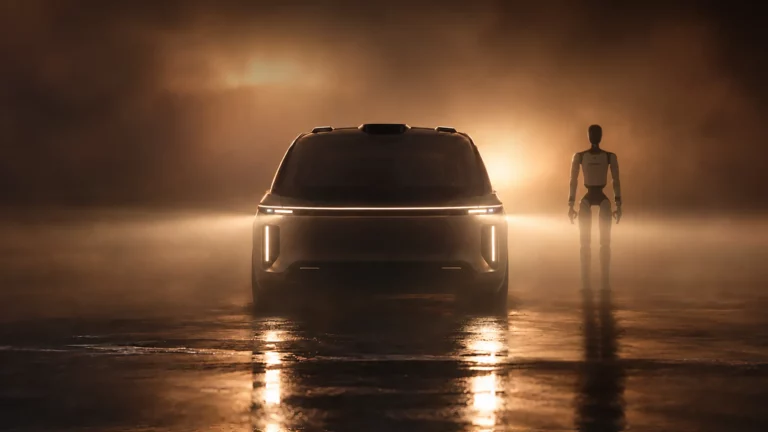

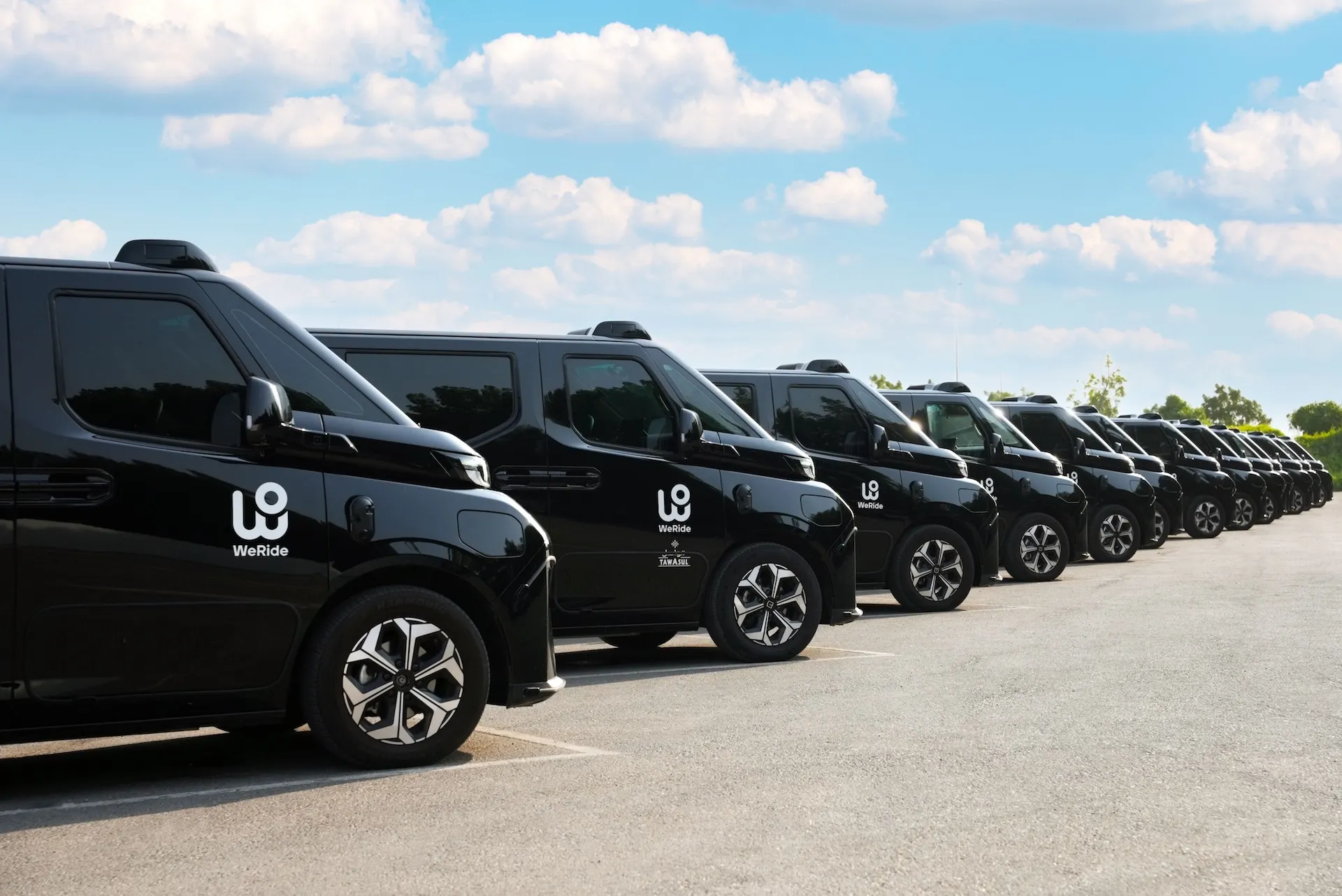
WeRide and Lenovo have agreed to jointly deploy 200,000 autonomous vehicles worldwide over the next five years, the companies announced at Auto China 2026. The expanded partnership, signed in Beijing, targets Level 4 robotaxis as the first wave and aims to push autonomous mobility past pilot status into sustained commercial operation. WeRide (NASDAQ: WRD, HKEX: 0800) and Lenovo (HKSE: 0992) framed the agreement as one of the industry’s largest scaled commitments to date.
Highlights
- 200,000 AVs planned for global deployment from 2026 through 2030, including robotaxis, autonomous minibuses, and sanitation vehicles
- HPC 3.0 platform cuts autonomous driving suite cost by 50% and lowers total cost of ownership by 84% versus HPC 2.0
- 2,000+ TOPS of AI compute delivered through Lenovo’s AD1 domain controller running NVIDIA DRIVE AGX Thor
- 40+ cities across 12 countries form WeRide’s existing operational footprint, with permits in eight markets
Scaling From Pilots to Commercial Fleets
The agreement extends a working relationship that began with the HPC 3.0 high-performance computing platform, launched in July 2025 and first deployed in WeRide’s mass-produced Robotaxi GXR. The platform is built on Lenovo’s AD1 L4 autonomous driving domain controller, which uses the NVIDIA DRIVE AGX Thor system-on-chip. Combined output exceeds 2,000 TOPS of AI computing power, with auto-grade design and fully redundant hardware and software.
Cost reductions sit at the center of the case for scale. According to WeRide and Lenovo, HPC 3.0 cuts the autonomous driving suite cost by half and lowers lifecycle total cost of ownership by 84% compared with the prior HPC 2.0 platform. Both figures are company-supplied and have not been independently verified.
Division of Labor
WeRide brings the autonomous driving stack and operating experience. The company runs R&D, testing, or commercial operations across more than 40 cities in 12 countries and holds AV permits in China, the UAE, Singapore, France, Switzerland, Saudi Arabia, Belgium, and the United States.
Lenovo contributes vehicle computing, AI infrastructure, and global manufacturing capacity. The AD1 controller is produced at Lenovo’s Hefei manufacturing base, which the company has positioned as a tier-one automotive supply node.
Robotaxis as the First Use Case
Robotaxis are the lead application under the agreement, with autonomous minibuses and sanitation vehicles flagged for follow-on deployment. WeRide already operates robotaxi services in Beijing, Guangzhou, and Abu Dhabi, and has Robobus pilots running in Belgium and Switzerland.
The companies described scaling robotaxi services as the central technical and commercial hurdle. Vehicles must perform consistently across different urban environments, regulatory regimes, and traffic patterns, while balancing compute performance, reliability, and unit economics.
Executive Commentary
Dr. Tony Han, Founder and CEO of WeRide, said: “Autonomous driving is entering a critical phase of commercial deployment, with industry competition shifting from pure technological capability to cost efficiency and scalable deployment. This expanded collaboration will further integrate WeRide and Lenovo’s core strengths in autonomous driving systems and computing platforms, creating a strong foundation for the planned global deployment of 200,000 AVs over the next five years.”
Peter Xu, Vice President and General Manager of Vehicle Computing at Lenovo, added: “Scalability is the defining challenge for autonomous driving, and computing is the foundation. Lenovo will continue to advance automotive‑grade computing platforms while leveraging our global manufacturing and supply chain strengths to deliver replicable, large‑scale capabilities for the industry. Deepening our collaboration with WeRide allows us to accelerate commercialization and bring Robotaxi services to global markets faster.”
What Was Not Disclosed
The announcement did not break the 200,000-unit figure down by region, vehicle type, or annual cadence. No capital commitment, revenue split, or per-unit economics were shared. The companies also did not name target launch cities for the next phase of expansion or specify how many units will use HPC 3.0 versus future generations.
Sign up for our weekly emails to stay up to date on the latest news!