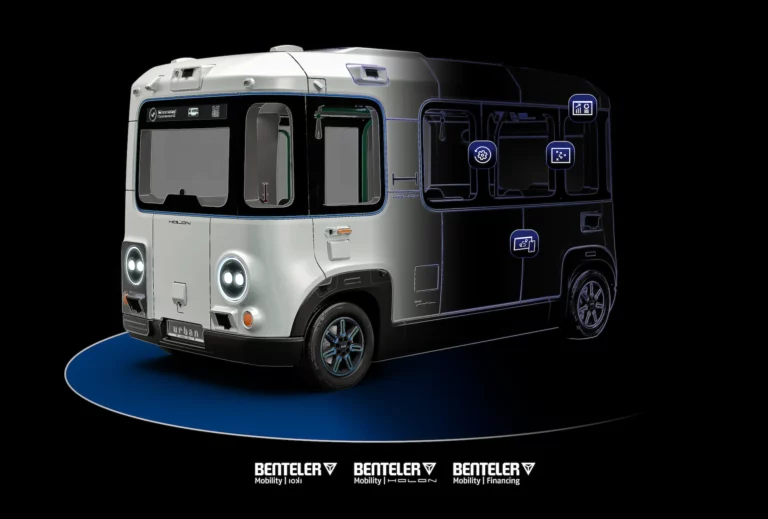


Autonomous driving technology leader WeRide has announced its expansion into Belgium, launching its Robobus service in the city of Leuven. This strategic move is a collaboration with De Lijn, the Flemish public transportation company, the City of Leuven, and mobility consultancy Espaces-Mobilités. The launch in Belgium marks WeRide’s 11th global market and strengthens its growing presence across Europe.
Key Highlights
- WeRide is deploying its autonomous Robobus in Leuven, Belgium, marking its fourth European market.
- The project is a partnership with public transport operator De Lijn, the City of Leuven, and Espaces-Mobilités.
- A pilot program is scheduled to run from mid-November through the end of January 2026.
- This initiative represents Belgium’s first commercial deployment of autonomous vehicles (AVs) in complex, mixed-traffic urban environments.
- The ultimate goal of the project is to achieve fully driverless operations integrated into the public transit network.
Phased Rollout in Leuven
The introduction of the WeRide Robobus will occur in several phases. The vehicle has begun mapping the route between Leuven Station and Heverlee, a busy corridor that represents typical Belgian urban traffic conditions. Public road testing, with a safety officer on board, is set to begin in mid-September.
Following successful testing and regulatory approval from the Public Department of Mobility and Transport, a pilot autonomous shuttle service will be operated by De Lijn. During this phase, passengers can board using a digital ticket obtained through an app, SMS, or their existing subscription. This pilot is a crucial step toward the shuttles entering regular service, which will mark a national milestone in the adoption of autonomous public transport. The service is designed to improve first- and last-mile connectivity for commuters.
A Strategic Step for Autonomous Mobility
Officials view this project as a significant advancement for mobility in the region. Annick De Ridder, Flemish Minister of Mobility, Public Works, Ports, and Sports, noted that AVs have the potential to “improve road safety, reduce traffic congestion, and ease parking pressure.” The technology can also provide essential “last mile” connections and serve rural areas.
Jennifer Li, CFO and Head of International at WeRide, described the entry into Belgium as a strategic step. “Europe is a key AV market with strong public investment and clear commercialization paths,” Li stated. “We’re pleased to partner with De Lijn, Espaces-Mobilités, and the City of Leuven… as we work to scale autonomous driving services across Europe.”
Ann Schoubs, CEO of De Lijn, added that autonomous shuttles are “no longer science fiction, but a concrete solution we are testing.” She emphasized the technology’s potential to create safer, more efficient, and more accessible shared mobility.
Preparation and Support
The launch was preceded by a year-long training program for De Lijn and Espaces-Mobilités, which included a study tour of WeRide’s Guangzhou office to gain hands-on experience with existing Robobus operations. The Belgian pilot is also supported by EIT Urban Mobility, an EU body focused on accelerating the transition to sustainable urban mobility.
Leuven was chosen as the pilot site due to its strategic location and focus on smart urban planning. The city has invested in smart mobility solutions and supportive regulations, making it an ideal environment for integrating AVs into its transport network.
Stock It To Me
Sign up for our weekly emails to stay up to date on the latest news!