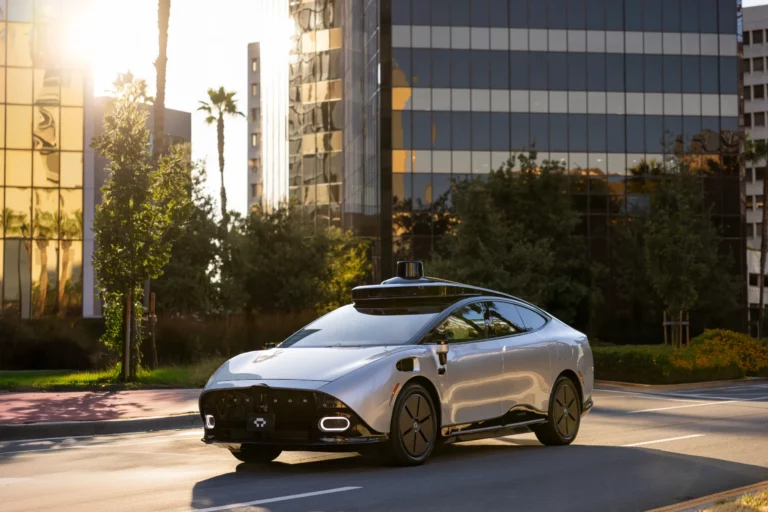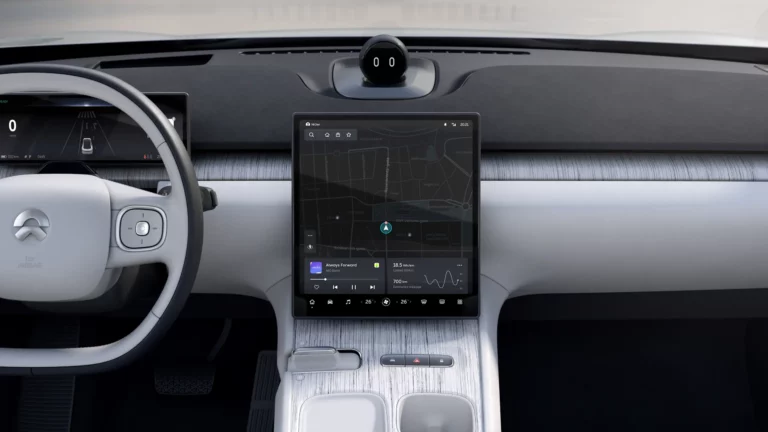


NVIDIA announced at CES a significant expansion of its DRIVE Hyperion ecosystem, adding major tier-1 suppliers, automotive integrators, and sensor partners to its autonomous vehicle platform. The new partners include Aeva, AUMOVIO, Astemo, Arbe, Bosch, Hesai, Magna, Omnivision, Quanta, Sony, and ZF Group.
Highlights
- New ecosystem partners including Bosch, Magna, ZF Group, and Sony join NVIDIA’s DRIVE Hyperion platform to develop Level 4 autonomous vehicle technology
- DRIVE Hyperion architecture delivers over 2,000 FP4 teraflops using dual DRIVE AGX Thor chips built on NVIDIA Blackwell architecture
- Cross-domain vehicle control enables synchronized braking, suspension, and steering through centralized compute and sensor fusion
- Alpamayo AI models released to accelerate Level 4 development for passenger and commercial fleets
Unified Platform for Level 4 Autonomy
The expanded ecosystem builds on collaborations announced at NVIDIA GTC Washington, D.C., advancing Level 4-ready autonomous passenger vehicles while extending the platform to long-haul freight applications.
“Everything that moves will eventually become autonomous, and DRIVE Hyperion is the backbone that makes that transition possible,” said Ali Kani, vice president of automotive at NVIDIA. “By unifying compute, sensors and safety into one open platform, we’re enabling our entire ecosystem, from automakers to the AV software ecosystem, to bring full autonomy to market faster, with the reliability and trust that mobility at scale demands.”
The unified approach provides automotive customers confidence that sensing systems and hardware maintain full compatibility with DRIVE Hyperion. This streamlines development, reduces testing time, and lowers overall costs.
Sensor Ecosystem Expansion
Several partners announced specific development initiatives on the DRIVE Hyperion platform:
- Electronic control units: Astemo, AUMOVIO, Bosch, Magna, Quanta, and ZF Group are building DRIVE Hyperion-based ECUs
- Qualified sensor suites: AUMOVIO, Aeva, Arbe, Hesai, Omnivision, and Sony have qualified their sensors on the production-ready architecture
- Supported technologies: Cameras, radar, lidar, and ultrasonic systems optimized for Level 4 autonomy
Cross-domain control of braking, suspension, and steering through centralized compute and sensor fusion supports synchronized, low-latency actuation essential for advanced automated driving.
DRIVE Hyperion Technical Specifications
At the platform’s core sits a production-ready compute and sensor reference architecture designed to make any vehicle Level 4-ready. Key specifications include:
- Dual DRIVE AGX Thor SoCs built on NVIDIA Blackwell architecture
- Over 2,000 FP4 teraflops of processing power
- Approximately 1,000 INT8 TOPS (trillion operations per second)
- Full 360-degree sensor fusion capability
This computational power enables transformer-based perception, vision language action models, and generative AI workloads capable of reasoning about complex driving scenes in real time.
Safety Framework and Development Tools
DRIVE Hyperion deployments will utilize NVIDIA Halos, a comprehensive safety and cybersecurity framework spanning data center to vehicle operations. Halos provides tools for independent inspection, system validation, and certification to meet global automotive and robotics safety standards.
Combined with large-scale simulation and AI data factory workflows, Halos enables continuous testing across millions of virtual and real-world driving scenarios.
New Alpamayo AI Models
NVIDIA released a new family of AI models and tools called Alpamayo, purpose-built to make Level 4 development more accessible. These models are optimized for real-time performance on DRIVE Hyperion, accelerating deployment across passenger and commercial fleets.
The release demonstrates NVIDIA’s end-to-end approach integrating high-performance computers, sensor integration, AI training, and simulation to streamline autonomous vehicle development.
Sign up for our weekly emails to stay up to date on the latest news!