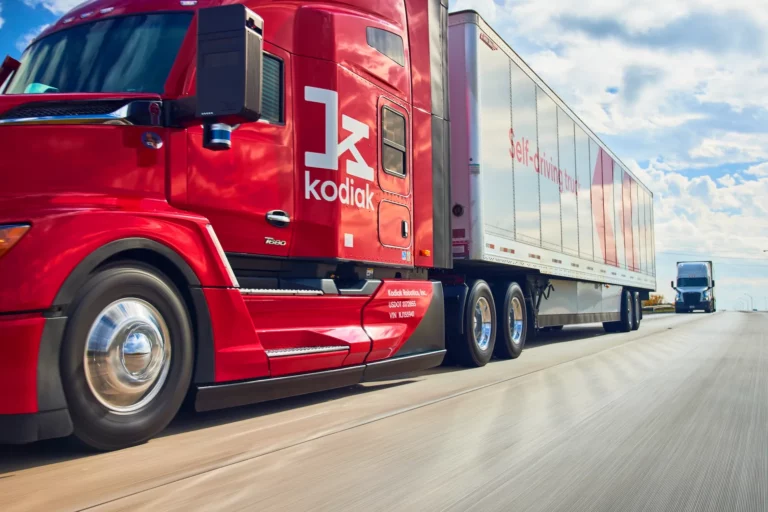


Volvo Autonomous Solutions (V.A.S.) says the operations layer built around a self-driving truck, not the vehicle’s technology alone, determines whether autonomous freight becomes a service customers can depend on. Alan Oakley, the company’s Head of Operations, writes that removing the driver from the cab does not eliminate the tasks a driver performs — it shifts them to planners, field operators, uptime specialists, load recovery teams, and remote support staff working outside the vehicle. Those roles form what Oakley calls the operating system around the Volvo VNL Autonomous, the company’s purpose-built autonomous truck, turning a vehicle capability into a transport service.
The Operations Team Behind an Autonomous Truck
Operations begins with the customer’s transport need, defining how a load moves from origin to destination safely and within the required delivery window. Oakley describes a team built from distinct roles — planners who map the route, field operators, uptime and safety specialists, load recovery teams, and remote support staff — that together function as the operating system around the truck. Without that team, he argues, autonomy is only a vehicle capability; with it, it becomes a transport service.
Why Removing the Driver Doesn’t Remove the Work
In manual trucking, the driver does more than steer, Oakley notes — observing the vehicle, communicating with site personnel, identifying issues, and supporting recovery when something goes wrong. Taking the driver out of the cab doesn’t eliminate those tasks; it reassigns them to people, systems, and processes outside the vehicle. He frames operations as part of the product itself rather than a layer added once the technology is ready, covering site procedures, remote vehicle-health monitoring, and contingency planning. Oakley warns that autonomous trucks still have to navigate emergency vehicles, construction zones, and shifting traffic patterns, and that an unanticipated disruption can escalate into a safety issue or a barrier to scaling the service if operations hasn’t prepared for it.
Uptime and Load Recovery
Vehicle uptime starts with continuous monitoring of fuel level, tire pressure, fault codes, mechanical indicators, and battery condition, according to Oakley, with the goal of catching problems before they become roadside events. Uptime planning also has to happen at the lane level, identifying and vetting service providers along each route before they’re needed. Load recovery works alongside uptime: while uptime keeps the vehicle available, load recovery protects the customer’s freight if the truck can’t continue — a function Oakley says has to be designed into the service since there’s no driver to manage it roadside.
Safety and Readiness
Oakley writes that operational safety can’t be separated from the safety of the autonomous driving technology itself — the operation has to show that inspections, site activities, and remote monitoring can be managed without a driver in the cab, and that this is part of the case for removing the driver in the first place. V.A.S.’s safety teams set standards for inspections, site assessments, training, and incident response, which operations then carries out and documents through logs, audits, and validation records. Readiness, in his framing, means building clear incident procedures and trained response teams for events that should be rare but can’t be improvised.
Proving the Model Through Pilots
Before an autonomous service scales, Oakley says the operation has to demonstrate it can manage real logistics requirements through realistic pilot programs that test the full transport solution, not just the driving technology. Some of that testing can happen with a human driver simulating autonomous constraints, letting the company refine procedures, validate site layouts, and identify gaps before the next lane or customer deployment. Customer expectations, he notes, only get more demanding after a pilot — not less.
The Business Case for Operational Discipline
V.A.S. says the value of autonomous freight comes from how it improves the movement of goods: safer operations, more predictable service, better equipment utilization, and faster transit on the right routes. On long highway stretches, the company says autonomous trucks can cut transit time because they aren’t bound by the Hours of Service regulations that govern human drivers, though fuel range, inspection, and maintenance still have to be planned around. Oakley argues that customers don’t ultimately benefit from autonomy because the truck is advanced — they benefit when freight moves reliably and efficiently, which he credits to operational discipline rather than the vehicle alone.
Sign up for our weekly emails to stay up to date on the latest news!