
Volvo Autonomous Solutions holds its autonomous trucks to the same automotive-grade quality standards it applies to manually driven trucks, a requirement the company ties to vehicles intended to operate close to 24 hours a day over several years. Henrik Häggström, Head of Autonomous Solutions Purchasing at Volvo Group, lays out the approach in Automotive-grade quality: The foundation for dependable autonomous trucks, published this week. The article covers how the company verifies hardware and software, controls manufacturing, manages suppliers, and tracks components once trucks are in service.
Highlights
- Same standard, no exceptions: Volvo applies identical requirements for maturity, readiness, and quality to autonomous and manually driven trucks.
- High utilization: Autonomous trucks are designed for the potential to run close to 24 hours a day over several years.
- Shared supplier framework: V.A.S. uses the Volvo Group quality-assurance framework already applied across thousands of suppliers and products.
- Two-stage hardware verification: Components pass design verification, then product verification using parts built with intended manufacturing methods.
Why Do Autonomous Trucks Need Automotive-Grade Quality?
According to Häggström, autonomy layers sensors, computers, software, steering, and braking into one integrated system on an already complex platform. Combined with near-continuous operation, that places heavy demands on reliability.
Automotive-grade quality, sometimes called OEM quality, describes a structured approach to developing, testing, manufacturing, and maintaining systems so they perform as intended over time. The company says this is fundamental to both safety and day-to-day dependability for customers.
How Hardware and Software Are Verified
Commercial vehicle components face vibration, humidity, temperature extremes, mechanical forces, and electrical stresses throughout their life. Volvo’s process proves performance in stages rather than through a single test:
- Design verification confirms an intended design can meet its performance and safety requirements, using simulation and physical testing, often on prototype parts.
- Product verification tests components built with the intended manufacturing methods under conditions representative of real-world use.
“It is one thing to demonstrate that a design can work. It is another to demonstrate that the component delivers the required performance consistently,” Häggström writes.
Software follows the same principle. It is verified and validated against functional, performance, safety, and cybersecurity requirements under applicable automotive software standards, and that work continues through development, integration, release, and field operation.
Autonomous Truck Manufacturing Adds Complexity
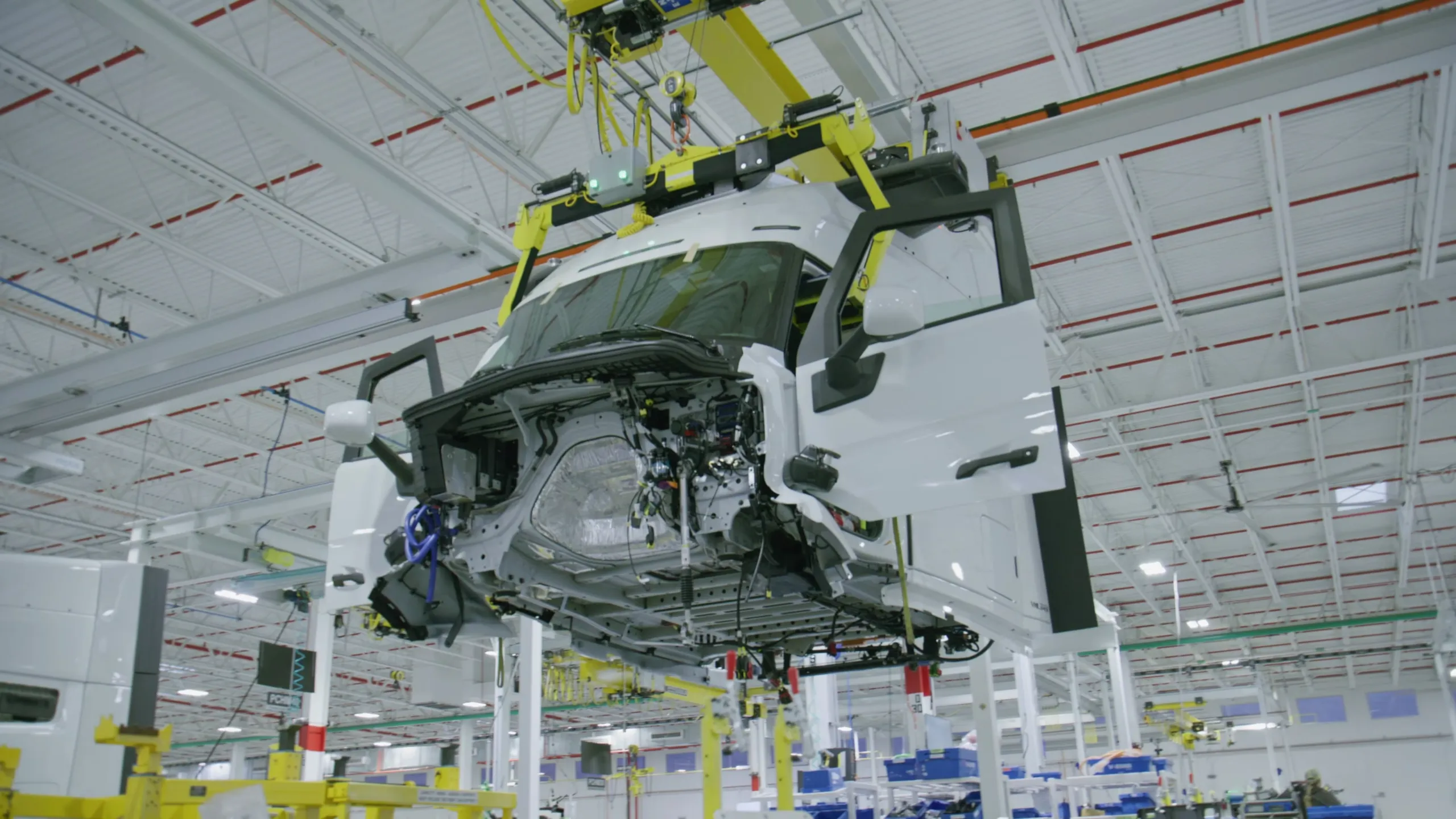
Individually validated components still depend on how they are assembled, connected, calibrated, and tested. Volvo uses controlled processes such as calibrated torque tools, controlled fitting, and end-of-line system calibration to keep results consistent from one vehicle to the next.
Converting a truck for autonomy adds computers, sensors, wiring, cooling, sensor-cleaning equipment, and, on on-road trucks, redundant systems. Some of this equipment is heavy or large and some is delicate, yet all of it must fit within an established production process without sacrificing quality or efficiency. Häggström identifies this controlled, repeatable process as a key difference between industrialized production and one-off installation, even when the same components are used.
Extending Quality Through the Autonomous Truck Supply Chain
V.A.S. relies on the existing Volvo Group quality-assurance framework rather than a separate one built for autonomy. Its elements include:
- Pre-selection audits of suppliers
- Development reviews during product creation
- Test coverage verification
- Field fault-handling processes once vehicles are operating
For some autonomous systems, the relationship is closer to a partnership than a traditional supplier arrangement. Volvo contributes complete-vehicle knowledge, while suppliers bring expertise in their specific functions and component designs. The quality expectation stays the same either way.
Traceability After Production
Quality work continues once a truck leaves the assembly line. If an issue surfaces in the field, Volvo must be able to identify which components are installed in affected vehicles and choose a remedy, whether a part replacement, a repair, or a software update. The company says this capability directly affects vehicle availability for both autonomous fleets and conventional truck owners.
Uptime and the Business Case
Much of autonomous transport’s value comes from high utilization, so unplanned downtime can undermine the business case for autonomous freight operations. Häggström notes that a component that saves money upfront but causes repeated downtime has a much larger effect on overall operations.
“Building on tried and tested methods of quality assurance is how we gain trust for the new technology throughout its lifecycle and ultimately buy-in from regulators, customers and the public,” he writes.