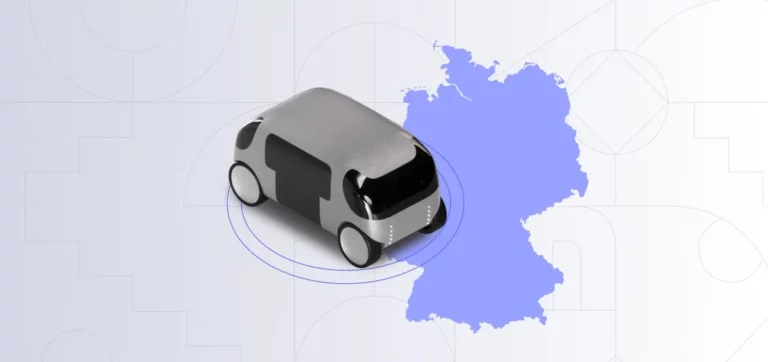


CaoCao Inc. became the first company authorized to conduct driverless robotaxi road testing in Hangzhou in April 2026, formally entering the unmanned testing phase that precedes commercial robotaxi operations. The Hong Kong-listed mobility platform (02643.HK) frames the approval as a regulatory endorsement of its autonomous driving system’s maturity and safety redundancy. Geely Holding Group Senior Vice President Yang Xueliang separately disclosed that CaoCao plans to use Hong Kong as a strategic bridgehead into global right-hand-drive markets. CaoCao shares closed at HKD 28.6 (approximately USD 3.65) on May 22, up more than 22% over two trading days.
Highlights
- CaoCao is the first company approved for driverless robotaxi road testing in Hangzhou, a key validation stage before commercial operations.
- Hong Kong is positioned as a launch point for expansion into global right-hand-drive markets including the United Kingdom, Australia, India, and Southeast Asia.
- Caitong Securities initiated coverage with a “Buy” rating and projects approximately RMB 15 billion (about USD 2.2 billion) in annual Robotaxi revenue by 2030.
- A purpose-built robotaxi model is targeted for mass production in 2027, with cumulative deployment planned to reach 100,000 vehicles by 2030.
What the Hangzhou Approval Signals
The Hangzhou permit makes CaoCao the first company in the city authorized to test robotaxis on public roads without a human safety operator in the vehicle. The company describes driverless road testing as one of the most critical validation phases before robotaxis move to true commercial operations. Securing the approval ahead of other Hangzhou operators, the company says, both reflects the maturity of its autonomous driving system and builds the regulatory track record needed to pursue similar permits in other Chinese cities.
The approval follows CaoCao’s previously announced agreement with Shanghai International Automobile City to deploy 100 robotaxis in Shanghai’s Jiading District this year. CaoCao says the Jiading deployment will help it accumulate real-world data in complex urban traffic and accelerate system iteration, while creating a demonstration effect for national and international observers.
Hong Kong as a Right-Hand-Drive Bridgehead
Yang Xueliang, Senior Vice President of Geely Holding Group, recently disclosed that CaoCao will showcase China’s first purpose-built robotaxi prototype at International MotorXpo Hong Kong 2026, with Hong Kong positioned as the launch point for global right-hand-drive expansion. CaoCao identifies the United Kingdom, Australia, India, and Southeast Asia as the principal right-hand-drive markets that a Hong Kong operating model would target.
The company argues that Hong Kong’s value extends beyond a showcase. From a regulatory standpoint, the city’s internationally aligned framework and transparent market would, in CaoCao’s view, provide comprehensive validation of both technological reliability and operating-system completeness. From a market standpoint, the company says establishing a mature robotaxi model in Hong Kong would supply a commercial reference for entry into emerging right-hand-drive markets.
CaoCao also notes that robotaxi exports differ structurally from traditional vehicle exports. Where traditional automakers transfer ownership of a product at delivery, robotaxi operators export an integrated system spanning platform, technology, and operations — a model the company says depends on full ecosystem coordination rather than technology alone.
Eva Cab and the 2030 Deployment Target
CaoCao’s purpose-built robotaxi prototype debuted in late April. The company was involved in product definition and R&D, drawing on its existing purpose-built vehicle program to reduce total cost of ownership. Under current plans, the customized robotaxi will enter mass production in 2027, with cumulative deployment targeted at 100,000 vehicles by 2030. The company cites cost control, safety redundancy design, and ease of maintenance as the model’s principal engineering priorities.
CaoCao positions itself as Geely Holding Group’s primary commercial platform for robotaxi operations, with a closed-loop ecosystem covering deeply customized vehicles, autonomous driving technology, and intelligent operations. The company points to a decade of urban shared-mobility operating experience and a full-lifecycle vehicle asset management system as elements that distinguish its operating capability from technology-first peers in the same segment.
Capital Markets Response
CaoCao’s recent share rally coincided with Tesla’s May 21 announcement that FSD (Supervised) is now available in the Chinese market, an external catalyst that drew investor attention to companies linked to the intelligent driving value chain. Caitong Securities recently initiated coverage of CaoCao with a “Buy” rating, projecting mass-produced robotaxis launching at scale in 2027 and cumulative deployment reaching 100,000 vehicles by 2030. The Caitong report estimates that by 2030 CaoCao’s robotaxi business could generate approximately RMB 15 billion (about USD 2.2 billion) in annual revenue, a figure that exceeds prior market expectations for the company’s traditional mobility business. CaoCao’s earlier ten-year Robotaxi strategy update and Green Intelligent Mobility Hub launch had set the framing for the current operational milestones.
CaoCao also signed a memorandum of understanding with the Abu Dhabi Investment Office in late 2025, which the company describes as the formal start of its global robotaxi operations.
Sign up for our weekly emails to stay up to date on the latest news!