

Sign up for our weekly emails to stay up to date on the latest news!
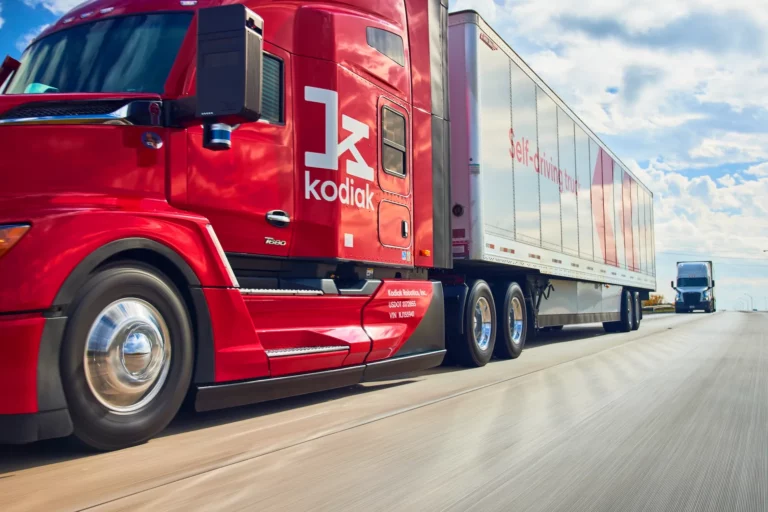
Congress is advancing legislation to support the integration of autonomous driving systems in commercial motor vehicles. The proposed bill, known as the AMERICA DRIVES Act, aims to clarify federal preemption over state laws that mandate human occupants in vehicles equipped with advanced automation. This measure seeks to foster innovation while ensuring safety and efficiency in interstate commerce.
Key Highlights
- Preemption of State Requirements: The act would allow Level 4 or Level 5 automated driving systems-equipped commercial motor vehicles to operate without a human driver on board or remotely.
- Regulatory Updates: The Secretary of Transportation must issue necessary regulations and streamline existing rules by September 30, 2027.
- Definitions Clarified: Key terms like “ADS,” “Level 4,” and “Level 5” are defined based on SAE International standards.
- No Undue Burdens: Regulations cannot discriminate against autonomous vehicles compared to traditional ones.
- Safety Technology Flexibility: Automated driving system equipment is excluded from vehicle width calculations.
Understanding the Bill’s Core Provisions
The AMERICA DRIVES Act, formally titled the Autonomous Mobility Ensuring Regulation, Innovation, Commerce, and Advancement Driving Reliability in Vehicle Efficiency and Safety Act, introduces amendments to Title 49 of the United States Code. At its heart, the legislation addresses a key barrier to autonomous trucking: state-level mandates for human presence. By preempting such laws, the bill enables commercial motor vehicles fitted with Level 4 or Level 5 automated driving systems to function independently in interstate operations. This means no need for an onboard driver or even remote human oversight, provided the vehicle meets federal standards.
The act emphasizes that nothing in its provisions requires vehicles to be equipped with automation, preserving flexibility for operators. To implement these changes, the Secretary of Transportation is directed to develop supporting regulations. This includes updating Subchapter III of Chapter 311, adding a new section specifically for ADS-equipped vehicle operations.
Streamlining Regulations for Innovation
A significant component of the bill focuses on reducing regulatory hurdles. By September 30, 2027, the Secretary must revise sections 350 through 399 of Title 49, Code of Federal Regulations. This revision builds on a 2019 advance notice of proposed rulemaking, aiming to adapt rules originally designed for human drivers. For instance, requirements like hours of service, drug testing, electronic logging devices, commercial driver’s licenses, and physical qualifications would be clarified to not apply when an ADS is engaged without a human present.
The bill also introduces definitions for emerging roles in autonomous operations. A remote driver is defined as someone who operates the vehicle from afar, without being physically positioned to control braking, acceleration, or steering manually. Meanwhile, remote assistance refers to human intervention providing information or advice during specific events to help the vehicle continue its trip safely.
To promote fairness, the legislation prohibits any new regulations that place undue burdens on carriers using ADS-equipped vehicles or discriminate against them relative to conventional commercial motor vehicles.
Enhancing Safety and Flexibility
The AMERICA DRIVES Act extends flexibility to vehicle design by amending Section 31113 of Title 49. It excludes automated driving system technologies and equipment from width calculations, allowing for innovative safety features without violating dimensional limits.
Additionally, the bill updates regulatory interpretations under Sections 392.22 and 393.95(f) of the Code of Federal Regulations. This includes recognizing cab-mounted warning beacons as permissible devices, aligning with a 2023 exemption application to enhance visibility and safety in autonomous operations.
Implications for the Trucking Industry
This legislation represents a pivotal step toward widespread adoption of autonomous commercial vehicles, potentially revolutionizing logistics, reducing costs, and improving road safety through advanced technology. By establishing federal oversight, it aims to create a uniform national framework, minimizing conflicts with varying state regulations. Industry stakeholders, including motor carriers and technology developers, stand to benefit from clearer paths to deployment.
As autonomous systems evolve, the act underscores the importance of balancing innovation with reliability. It references SAE International’s J3016 standards for defining automation levels, ensuring consistency with global practices. Level 4 systems provide full automation under defined conditions without human intervention, while Level 5 extends this capability to all conditions.
Overall, the AMERICA DRIVES Act positions the United States as a leader in autonomous mobility, supporting economic growth in transportation while prioritizing safety and efficiency. With these changes, the future of trucking could see fewer human errors and more streamlined operations across the nation.
Sign up for our weekly emails to stay up to date on the latest news!