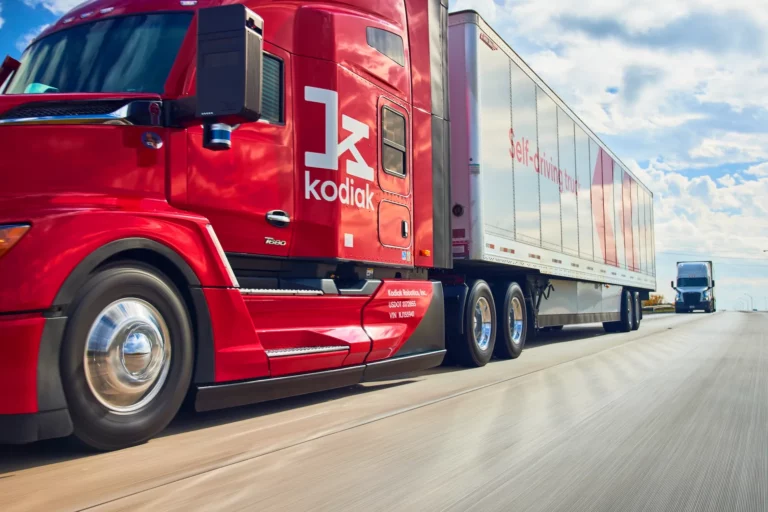


Value Truck will deploy Aurora’s driverless trucks on two long-haul lanes — Dallas-Laredo and Fort Worth-Phoenix — under a new customer agreement with Aurora Innovation (NASDAQ: AUR). The deal coincides with the arrival of Aurora’s second-generation driverless trucks, which Aurora says position it to meet growing demand for the Aurora Driver. The cross-border carrier plans to use the self-driving system to move freight through U.S. border cities such as Laredo, Texas, where nearshoring is pushing freight volume higher.
Highlights
- Value Truck will initially run the Aurora Driver on two corridors: Dallas-Laredo and Fort Worth-Phoenix.
- Laredo is the busiest land port in the Western Hemisphere and handles roughly 40% of all freight moving between the U.S. and Mexico.
- The deployment adds the potential for 24/7 capacity on long-haul routes while Value Truck’s own drivers stay on local freight.
- Value Truck is headquartered in Phoenix, Arizona, and operates terminals across the U.S. and Mexico.
Two Corridors to Start
Value Truck is a full-service, cross-border carrier that moves heavy and oversized industrial equipment, retail goods, and perishables. The company will initially deploy the Aurora Driver on the Dallas-Laredo and Fort Worth-Phoenix routes, freeing its own drivers to concentrate on local freight while adding round-the-clock capacity on high-volume lanes. The operating split places autonomous capacity alongside a conventional fleet rather than in place of it.
“We’re proud to work alongside Aurora to move autonomous trucking from possibility to everyday freight operations,” said Joe Skoog, Chief Executive Officer of Value Truck. “The Aurora Driver will add flexible capacity on key long-haul corridors while allowing our drivers to focus where their experience matters most. Phoenix to Fort-Worth and Laredo to Dallas are the starting point, not the finish line. Together, we intend to build one of the most advanced transportation networks across North America.”
Why Does Laredo Matter for Autonomous Freight?
Laredo is the busiest land port in the Western Hemisphere, handling approximately 40% of all freight crossing between the United States and Mexico. As manufacturing moves closer to the U.S. border, nearshoring is driving a surge in freight through the crossing, which Aurora says is lengthening pick-up times for conventional drivers at congested border hubs.
“Freight volume on routes like Dallas-Laredo is growing faster than available capacity, and that gap is exactly what the Aurora Driver is built to close,” said Zac Andreoni, Vice President of Business Development at Aurora. “Value Truck is exactly the kind of customer we built our second-generation trucks for — a carrier that is growing and needs flexible, round-the-clock coverage on high-growth corridors.”
Capacity Without Hours-of-Service Limits
Aurora frames the Aurora Driver as a way for carriers to keep border freight moving on American highways around the clock, without the hours-of-service limits that constrain conventional drivers. That argument tracks the timing of the agreement, which lands as Aurora brings its newly launched second-generation trucks into commercial service.
Value Truck operates as a North American logistics platform combining a company-owned asset fleet and cross-border terminal network with an asset-light operation, moving freight for shippers in manufacturing, building products, chemicals, and defense.
Sign up for our weekly emails to stay up to date on the latest news!