
Applied Intuition will supply its Vehicle OS software to both Honda and Nissan under two separate agreements announced this week. Each deal supports the automaker’s in-house development of a next-generation software-defined vehicle (SDV) platform. The Honda partnership targets a centralized, upgradable platform for Honda’s next-generation vehicle architecture. The Nissan collaboration extends a relationship that began in 2020 into in-vehicle operating systems and AI-native development tools.
Highlights
- Two Japanese automakers: Honda and Nissan will each use Applied Intuition’s Vehicle OS to support their own SDV platforms.
- Nissan relationship since 2020: Nissan first adopted Applied Intuition’s simulation technology in 2020. The new agreement extends the relationship to the operating system and AI-native development tooling.
- Multi-powertrain scope: Both platforms are designed to span multiple powertrains. Honda’s agreement specifically includes hybrid vehicles.
- Joint teams: In both deals, Applied Intuition software teams in Japan and Silicon Valley will work alongside the automakers’ engineers.
How the Two Agreements Compare
| Automaker | Platform goal | Applied Intuition contribution | Relationship |
|---|---|---|---|
| Honda | Centralized, upgradable, highly personalized full-vehicle SDV platform | Vehicle OS; OS and software development expertise across all powertrains, including hybrids | New partnership |
| Nissan | Scalable, open next-generation in-vehicle software platform for AI-defined vehicles (AIDVs) | Vehicle OS; AI-native development tooling | Began in 2020 with simulation |
Honda: Speed Without Ceding Control
Honda says Vehicle OS is intended to help its internal teams speed development and reduce costs during the company’s SDV transition. Applied Intuition will support Honda’s existing standards for quality, safety, and reliability.
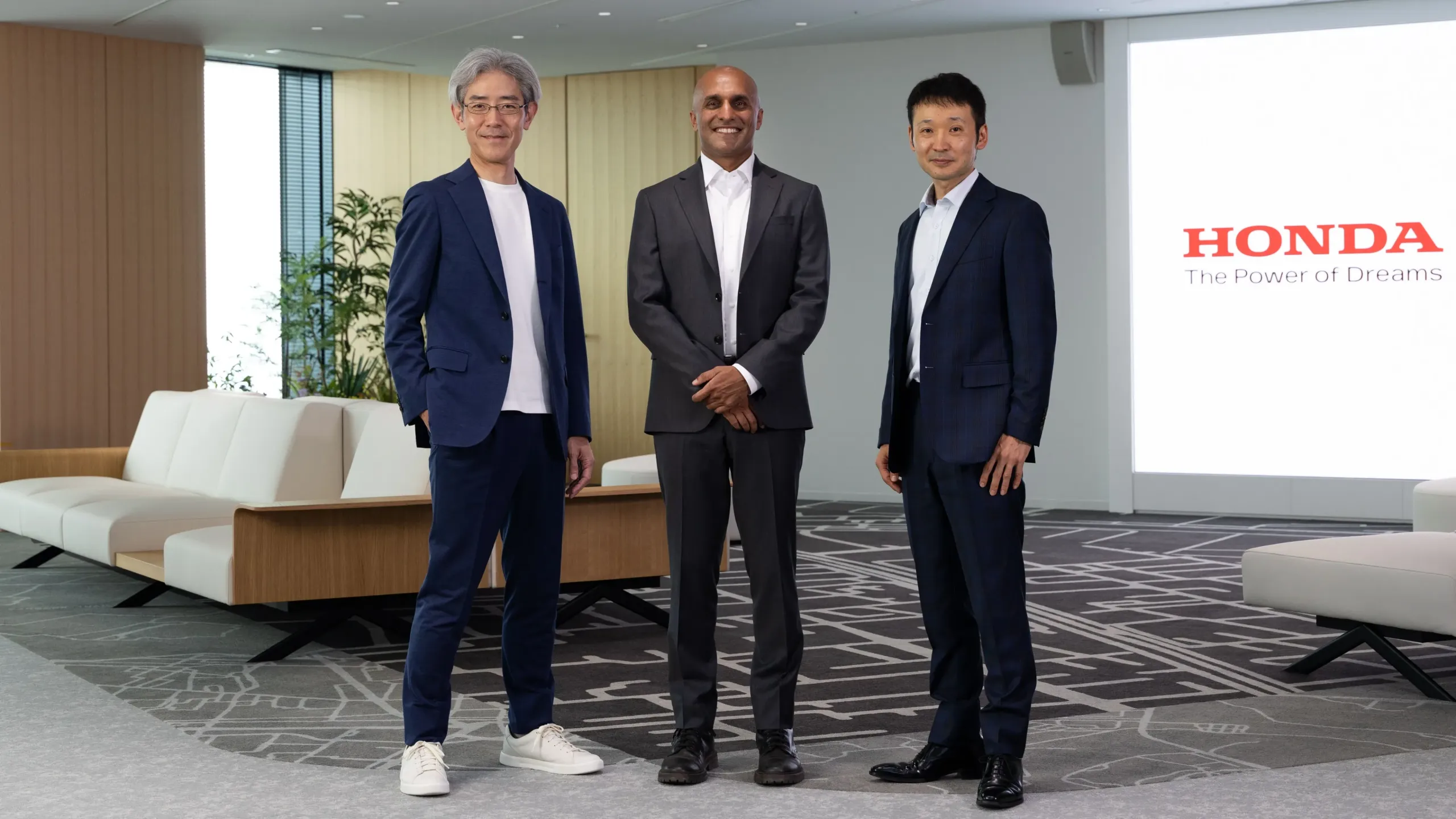
“Honda is advancing toward a software-defined future where vehicles can continuously evolve and deliver highly personalized experiences to our customers,” said Mahito Shikama, Chief Officer, Corporate Strategy Operations of Honda Motor Co., Ltd. “By partnering with Applied Intuition, we can accelerate our internal development efforts while maintaining control over our vehicle architecture and software direction.”
“Honda is a world-class, technology-forward automaker, and together we are accelerating the development of a full-vehicle SDV platform,” said Qasar Younis, co-founder and CEO of Applied Intuition. “By bringing Silicon Valley software practices together with Honda’s engineering excellence, we’re enabling a centralized and upgradable vehicle platform that can scale to production.”
What Is Nissan’s AI-Defined Vehicle Push?
Nissan describes its goal as developing AI-defined vehicles. According to Applied Intuition, its tools will support that work in three ways:
- Modernizing software workflows
- Abstracting hardware complexity, which unifies legacy and modern development practices
- Enabling a common software platform across multiple powertrains
The companies have already demonstrated AI-powered development workflows together, including a live demonstration of a Nissan LEAF-based test vehicle at AWS Summit Japan.
“Nissan is strengthening its software and AI-driven development capabilities as we advance toward the realization of AI-defined vehicles,” said Takashi Yoshizawa, corporate executive, SDV Engineering Division, Nissan Motor Co., Ltd. “As we pursue a more efficient and agile approach to vehicle development, we highly value Applied Intuition’s technical expertise and proven track record in advanced vehicle-software development.”
“Nissan is taking an ambitious approach to transforming how vehicles are developed,” Younis said. “By combining AI-native software development with Nissan’s vehicle engineering expertise, we aim to redefine how vehicles are developed, evolved and continuously updated over time, as well as the value customers expect from their vehicles.”
Applied Intuition’s Global Automaker Reach
Applied Intuition already has passenger vehicle partnerships in Europe and the United States. The company says the Honda agreement means it now works with automakers in every major global region.